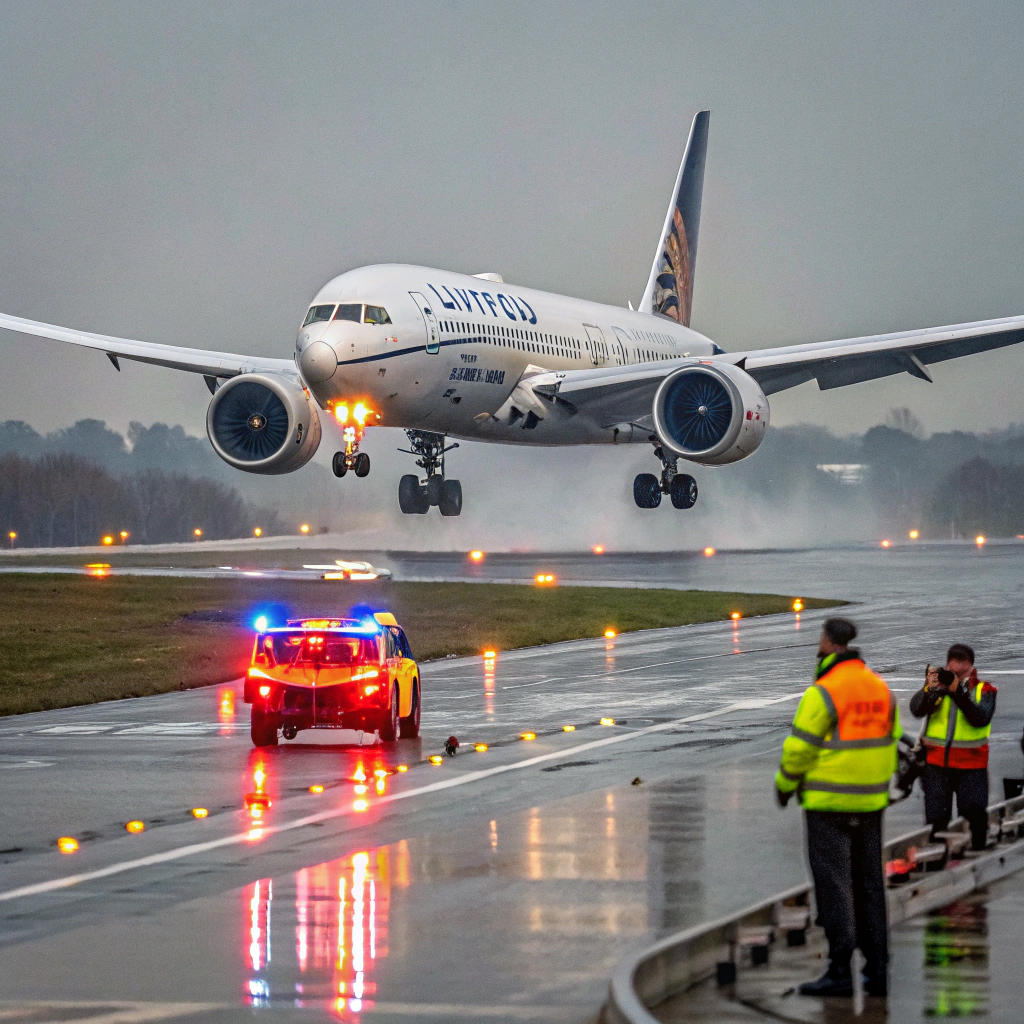
On May 27, 2025, United Airlines Flight UA770 from Barcelona to Chicago was cruising at 37,000 feet when passengers were informed of an unexpected diversion. The Boeing 787-9 Dreamliner was rerouted to London Heathrow in what appeared to be a textbook emergency landing.
But behind this quick decision was a sophisticated array of cutting-edge aviation technology, automated systems, and seamless international coordination that turned a potential crisis into a safe and controlled emergency response. What happened during this flight is more than just a headline—it’s a powerful case study in how modern technology ensures flight safety.
What Triggered the Emergency: Squawk Code 7700
The turning point came when the flight crew activated Squawk Code 7700—a universal transponder signal indicating a general emergency. This one action initiated an advanced chain reaction involving real-time data sharing, automated protocols, and global communication systems.
How Squawk 7700 Works
- Frequency: 1090 MHz
- Range: Over 200 nautical miles
- Transmission: Real-time updates including aircraft ID, location, speed, altitude, and system alerts
Once activated, the transponder instantly alerted multiple air traffic control centers, including those in London, Madrid, and Paris. The emergency signal reached EUROCONTROL, United Airlines’ operations center in Chicago, and Heathrow’s emergency services within seconds.
Boeing 787-9 Dreamliner: Built for Safety
The Dreamliner used for Flight UA770 (registration N26902) is designed for emergency resilience. It uses fly-by-wire controls, redundant systems, and constant health monitoring to manage high-stress scenarios like this one.
Key Emergency Features
- Three independent flight computers with automatic failover
- Envelope protection to prevent unsafe maneuvers
- Real-time diagnostics via Airplane Health Management (AHM)
- ACARS data link for continuous communication
These systems helped the flight crew assess the situation accurately and communicate efficiently with ground control, making quick decisions based on real-time telemetry.
Real-Time Communication & Data Networks
During the diversion, a network of global aviation systems collaborated in real-time. This wasn’t just human expertise—it was advanced technology at work.
Technologies Involved:
- ACARS: Transmitted real-time engine data, position updates, and weather inputs to United’s ops center
- SATCOM: Provided long-range voice and data communications
- ADS-B: Broadcast detailed flight data to both ground systems and public platforms like FlightRadar24
With all these systems active, decision-makers had a full picture of the flight’s condition, even before it reached Heathrow.
Air Traffic Control: Seamless International Coordination
Flight UA770’s diversion required coordinated action between several ATC systems. Within 15 minutes, it moved from Spanish to French, and finally to British airspace with zero delay.
EUROCONTROL’s Role
- Conflict resolution algorithms cleared a flight path
- Weather-integrated route mapping ensured the safest option
- Standardized protocols enabled rapid handover between control centers
Thanks to digital communication, radar fusion, and automated handoffs, the aircraft was guided safely to Heathrow’s Runway 27R within 30 minutes of declaring an emergency.
Tracking in Real Time: How the Public Followed Along
Platforms like FlightRadar24 allowed the public to track the UA770 flight in real-time, thanks to the aircraft’s ADS-B system.
ADS-B Key Specs
- Accuracy: Within 3 meters
- Update Rate: Every second during emergencies
- Data Shared: Speed, altitude, GPS position, emergency status
More than 50,000 users followed the flight online during its emergency diversion, illustrating how accessible and transparent modern aviation data has become.
AI & Machine Learning: The Invisible Assistants
One of the most underreported heroes of this event was artificial intelligence. AI systems behind the scenes analyzed data and helped optimize responses at every stage.
AI in Action
- Emergency routing algorithms identified the best diversion path
- Weather prediction models calculated turbulence and visibility
- Maintenance forecasting tools prepared crews on the ground
- Passenger service systems triggered rebooking and hotel arrangements
These tools help reduce pilot workload and streamline decision-making, especially under stressful conditions.
Airport Response Systems: Heathrow’s High-Tech Reaction
London Heathrow was fully prepared when UA770 arrived, thanks to automated emergency detection and pre-planned response systems.
Key Airport Tech:
- Emergency radar alerts triggered fire/rescue team readiness
- Automated gate assignment for rapid deboarding
- Passenger info systems updated travelers in real time
- Thermal imaging and ARFF vehicles ensured aircraft inspection and safety
Heathrow’s emergency protocols functioned like a digital symphony, seamlessly managing aircraft, passenger, and ground logistics in real-time.
Predictive Analytics: Preventing Future Crises
While the response was impressive, the industry is focused on avoiding such emergencies in the first place. Predictive analytics plays a big role here.
Tools in Use:
- Big data analysis from thousands of flights daily
- AI pattern recognition in aircraft component performance
- Climate and weather modeling for route optimization
- Pilot behavior analytics for training insights
The data from Flight UA770 will now feed into these systems, helping make future flights even safer.
Final Thoughts: Why Flight UA770 Matters
The emergency diversion of United Airlines Flight UA770 wasn’t just about safely landing a plane. It was a full demonstration of how far aviation technology has advanced. From the second the transponder code was activated to the coordinated landing in London, every action was supported by sophisticated systems, predictive analytics, and real-time AI decision-making.
This event is a milestone that shows the aviation industry’s transformation—from analog processes to digitally optimized safety ecosystems. It reassures passengers that when things go wrong, the systems in place today are smarter, faster, and more connected than ever before.
Visit Bharatinformation.org