AI Automated Testing
Software quality has now become a determinant factor in corporate success in the present-day hectic digital world. Business organizations everywhere are struggling to deliver more and more powerful products in tighter and tighter chains. Conventional methods of testing, though reliable, often cannot keep pace with the modern pace of development. The way we approach software testing is changing as a result of the technological revolution spurred by this problem. There has never been a greater need for reliable, effective testing solutions as companies continue to embrace digital transformation. The solution to this expanding requirement is AI automated testing, which provides a sophisticated method that overcomes the drawbacks of conventional testing techniques while creating new opportunities for software quality assurance.
-
Lightning-Fast Test Execution Speed
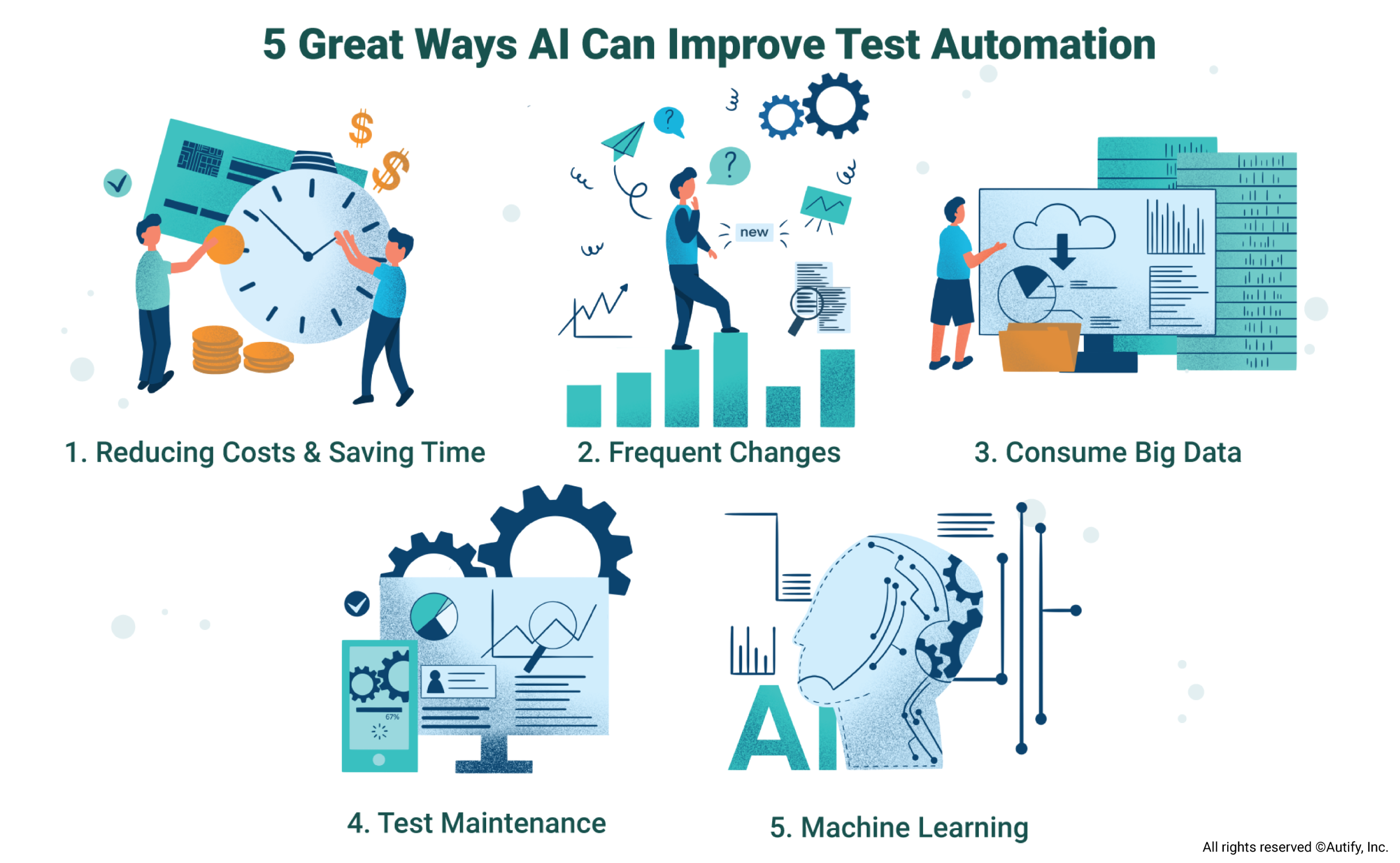
AI automated testing would greatly speed up the entire process of testing by running thousands of test cases in minutes instead of days or hours. Traditional manual testing involves a bottleneck and may delay the release of products because manual inspectors would need to go through each scenario slowly and thoroughly. By executing several tests concurrently across various settings and configurations, AI systems remove these delays and guarantee thorough coverage without sacrificing speed or accuracy.
-
Superior Accuracy and Consistency
AI-powered testing systems eliminate human mistakes by maintaining unchanging accuracy in all testing scenarios. The AI systems continually test mechanically, unlike human testers who can miss the faults due to fatigue, distraction, or neglect. Due to its reliability, significant faults are identified at the start of the development process and saving the costs of costly corrections and maintaining the quality of the end product.
-
Significant Cost Reduction
Reductions in labor costs, rework fees, and time-to-market delays result in significant financial benefits for organizations. AI automated testing no longer requires large testing teams, decreasing the cost of fixing issues after a release. Increased output, fewer labor-intensive processes, and faster in-process delivery times that accelerate revenue generation soon recoup the initial cost incurred in setting up the AI testing framework.
-
Enhanced Test Coverage and Depth
AI systems are excellent at developing thorough test scenarios, including edge situations and intricate user interactions that human testers could miss. Machine learning algorithms analyze the patterns of behavior of applications so that tests are designed to cover rare, but potentially problematic, cases. This cautionary measure provides more thorough software by making sure other test situations are given to applications, making sure to dig out performance issues and weak spots that face testing simply in conventional ways, thus creating software that has been tested, and therefore, more reliable.
-
Intelligent Defect Detection and Analysis
Advanced AI systems can not only identify aesthetic flaws, but with coding patterns and the history of repairs, predict future issues. These systems become more effective at detecting tiny symptoms of a malfunction, which can be escalated to a problem by applying through experience of iterative testing. Development teams can proactively fix problems thanks to these predictive capabilities, which make applications more reliable and lower maintenance expenses throughout the course of the software lifecycle.
Conclusion
The inclusion of AI in test automation marks a paradigm shift in how we conceptualize software quality, not a technical improvement. Implementing AI testing today, a business gains a significant competitive advantage and can acquire the capabilities required to fulfill existing and future demands.