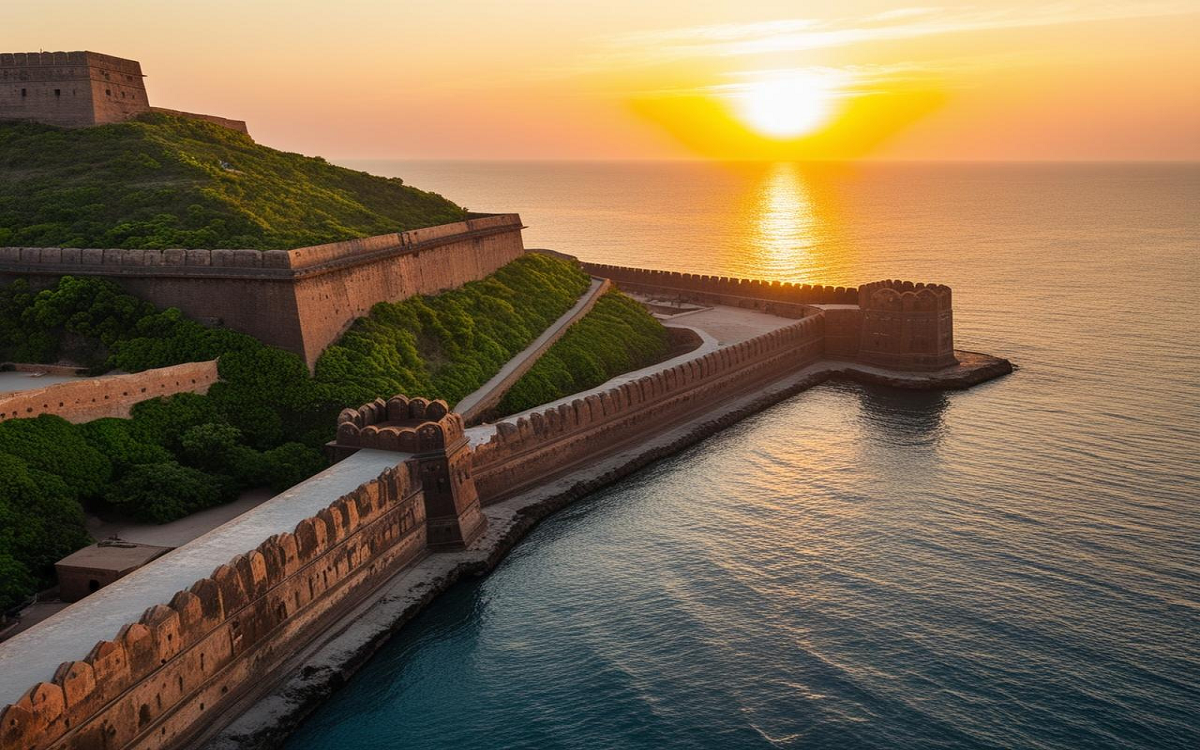
Located along the scenic Konkan coastline in Maharashtra, Korlai Fort is a hidden treasure that holds immense historical and architectural significance. Built by the Portuguese in the 16th century, this fort stands as a testament to their strategic military presence in India. Overlooking the vast Arabian Sea, Korlai Fort offers breathtaking views, rich cultural heritage, and a glimpse into the colonial past of the region.
Despite being lesser-known compared to other forts in Maharashtra, Korlai Fort is an ideal destination for history enthusiasts, adventure seekers, and photographers. Whether you are fascinated by ancient battles, architectural marvels, or panoramic sea views, this fort has something unique to offer. Let’s explore seven amazing facts that make Korlai Fort a must-visit historical site.

The Amazing Facts About Korlai Fort:
1. The Fascinating History of Korlai Fort
Built in 1521 by the Portuguese, Korlai Fort served as a strategic defense post along the Konkan coast. Initially named “Morro de Chaul,” it was constructed to safeguard Portuguese trade routes and prevent enemy invasions. The fort witnessed numerous battles between the Portuguese and the Marathas, as both powers sought control over this crucial region.
Although the Marathas briefly took over the fort in the late 17th century, the Portuguese eventually regained control and fortified it further. The British later dominated the region, marking the end of Portuguese influence. Today, the ruins of Korlai Fort serve as a silent reminder of India’s colonial struggles and military history.

2. Korlai Fort’s Stunning Architecture and Design
The Portuguese architectural brilliance is evident in the design of Korlai Fort. Spread over 2828 feet, the fort features 11 massive gates, bastions, and watchtowers, which were used to monitor enemy movements. Constructed using laterite stone and mortar, the fort’s walls have stood the test of time despite natural erosion.
One of the most fascinating elements of the fort is the Portuguese inscriptions on its walls, offering insights into its past. The fort also houses remnants of churches, water reservoirs, and old storage rooms, reflecting the self-sufficient lifestyle of its occupants. The fort’s strategic location on a hilltop ensured that it remained a nearly impenetrable stronghold for centuries.

3. The Breathtaking View from Korlai Fort
One of the most captivating aspects of Korlai Fort is the stunning panoramic view it offers. Positioned at an elevation, visitors can witness the Arabian Sea on one side and lush green landscapes on the other.
The fort provides a 360-degree view of the surrounding villages, rivers, and beaches. Photographers and nature lovers especially enjoy the mesmerizing sunrise and sunset views from the fort. The peaceful environment, coupled with the sound of crashing waves, makes it an ideal spot for relaxation and sightseeing.

4. The Unique Indo-Portuguese Influence of Korlai Fort
Korlai-Fort is a perfect blend of Indo-Portuguese cultural heritage. The fort’s design incorporates elements from both civilizations, reflecting a mix of European and Indian architectural styles.
One of the most intriguing aspects of Korlai-Fort’s cultural significance is the Kristi language, a unique Portuguese-based Creole dialect still spoken by some residents of the nearby Korlai village. This linguistic influence highlights the deep-rooted Portuguese presence in the region, making it an interesting study for historians and linguists alike.

5. The Mysterious Tunnels and Secrets of Korlai-Fort
Like many ancient forts, Korlai-Fort is surrounded by legends of hidden tunnels and escape routes. These underground passages are believed to have been used by Portuguese soldiers to evacuate during enemy attacks.
Though many tunnels have collapsed over time, explorers have discovered remnants of these underground structures. Local folklore suggests that some tunnels lead to secret chambers, adding an air of mystery to the fort. Visitors and adventure seekers often explore these ruins, hoping to uncover the fort’s hidden past.

6. Best Time to Visit Korlai-Fort
To experience Korlai-Fort at its best, plan your visit between October and March, when the weather is cool and pleasant. This season makes it easier to explore the fort without extreme heat or humidity.
Tips for visiting Korlai-Fort:
- Wear comfortable trekking shoes, as the climb can be steep and rocky.
- Carry plenty of water and snacks, as there are no food stalls inside the fort.
- Start your trek early in the morning to avoid the afternoon heat.
- Avoid visiting during the monsoon season (June-September), as the trails can be slippery and dangerous.

7. Why Korlai-Fort is a Must-Visit for History Lovers
For history enthusiasts, Korlai-Fort offers an immersive experience into India’s colonial past. Unlike many forts in Maharashtra that have strong Maratha influences, Korlai-Fort stands out due to its Portuguese legacy.
The fort provides deep insight into Portuguese military tactics, maritime strategies, and Indo-European interactions. Walking through its ruins, one can visualize the battles, power struggles, and cultural exchanges that shaped the region’s history. If you have a passion for ancient architecture, hidden stories, and breathtaking landscapes, Korlai-Fort should be on your travel list.

Conclusion
Korlai-Fort is much more than an ancient military structure—it is a symbol of Maharashtra’s rich history and diverse heritage. From its fascinating past and architectural grandeur to breathtaking views and mysterious tunnels, every corner of the fort has a story to tell.
Whether you are a history buff, an adventure seeker, or a photography enthusiast, Korlai Fort promises a memorable experience. If you’re planning a trip to Maharashtra, add Korlai-Fort to your itinerary and witness the magic of this historical gem.
Have you visited Korlai-Fort? Share your experiences in the comments below!

For more information, visit Bharat Information