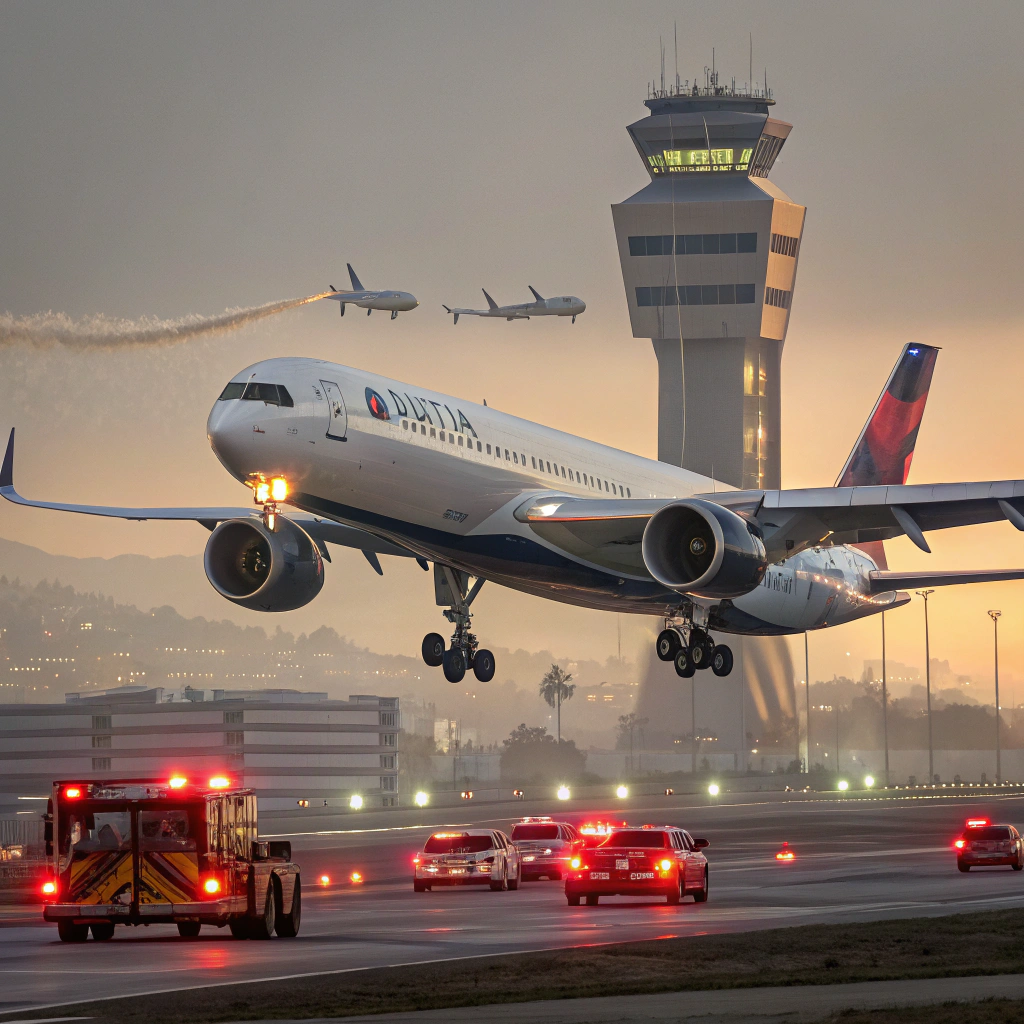
When Delta Flight DL275 made an emergency landing at Los Angeles International Airport (LAX) on May 28, 2025, it wasn’t just a typical in-flight diversion. This incident revealed major flaws in current aircraft monitoring systems—flaws that cutting-edge aviation technology might have prevented.
In this article, we break down exactly what happened to Delta Flight DL275, what caused the diversion, how much it cost, and how artificial intelligence and predictive analytics could help stop future incidents before they even start.
What Happened to Delta Flight DL275?
Delta Flight DL275 took off from Detroit Metropolitan Wayne County Airport (DTW) at 3:53 PM local time on May 27, 2025. The aircraft, an Airbus A350-900 (registration N508DN), was en route to Tokyo Haneda Airport (HND). However, 12 hours into the flight, something went wrong.
Engine Issue Over the Pacific
While cruising at 38,000 feet over the North Pacific Ocean—around 620 nautical miles southwest of Anchorage, Alaska—the flight crew received warnings about a malfunction in the Rolls-Royce Trent XWB engine’s anti-ice system.
These systems are crucial for long-haul, high-altitude flights through cold regions like the Bering Sea. When this system failed, safety protocols kicked in. The pilots made a quick but strategic decision: divert the flight to Los Angeles International Airport (LAX).
Why LAX Was Chosen for the Emergency Landing
The choice to land at LAX was not random. It was based on several smart logistical and safety factors:
- Delta Hub: LAX is a major hub for Delta with advanced Airbus A350 maintenance facilities and Rolls-Royce engine experts on standby.
- Runway & Safety: The airport has long runways suitable for heavy aircraft landings, emergency services, and ideal weather conditions.
- Passenger Support: LAX offers multiple daily flights to Tokyo and extensive rebooking and layover options.
The flight landed safely at 1:08 AM on May 28, 2025, completing a grueling 12-hour and 15-minute journey that cost Delta an estimated $2.3 million in operational disruptions, fuel waste, and passenger compensation.
Technical Breakdown: What Went Wrong?
The problem centered around the anti-ice system in the Rolls-Royce Trent XWB engine—a technology designed to prevent ice formation on engine components by using hot air from the engine’s compressor.
When the system malfunctions:
- Ice can accumulate on fan blades and vanes.
- Engine thrust may reduce.
- In worst cases, engine failure can occur.
Despite this failure, the Airbus A350 handled the situation with stability. The aircraft maintained proper altitude, speed, and fuel reserves during its five-hour emergency reroute to LAX.
The Real Cost of a Mid-Flight Diversion
According to aviation analysts, Delta likely lost about $2.3 million due to:
- Flight delay penalties.
- Rerouting costs and excess fuel usage.
- Maintenance inspections and repairs.
- Hotel stays, meal vouchers, and rebooking for hundreds of passengers.
Flight diversions aren’t just logistical headaches—they’re expensive and damaging to airline reputations.
How Smart Tech Could Have Prevented DL275’s Diversion
Here’s where artificial intelligence and predictive analytics come in.
Predictive Maintenance Technology
Modern aviation platforms use AI to analyze sensor data from engines, hydraulics, avionics, and more—hours or even days before a flight takes off.
If Delta had such a system in place:
- The malfunction in the anti-ice system could have been detected during pre-flight checks.
- Maintenance teams could have addressed the issue while the plane was still on the ground.
- The costly diversion could have been entirely avoided.
Airlines Already Using Smart Monitoring
Several airlines are already ahead of the curve:
- Lufthansa Technik uses AI-powered tools to track engine health across its fleet.
- United Airlines deploys predictive systems to detect faults 24–72 hours in advance.
- Singapore Airlines has partnered with Rolls-Royce for real-time monitoring of Trent engines.
These technologies have reduced unscheduled maintenance events by up to 35%, saving millions annually.
Cybersecurity and AI in Aviation
While smart systems offer safety, they also introduce cybersecurity challenges. Connected aircraft systems must be shielded against hacking and data breaches. This includes:
- Encrypted communication channels.
- Real-time firewall systems.
- Strict compliance with aviation cybersecurity standards.
Regulations and AI in Flight Safety
The Federal Aviation Administration (FAA) and European Union Aviation Safety Agency (EASA) are actively creating new standards for AI use in aviation. These include:
- Certification for AI-based maintenance software.
- Required fail-safe protocols.
- Transparent data audit trails for all AI-driven recommendations.
Broader Impact on the Aviation Industry
The DL275 incident underscores a growing trend: airlines must evolve with technology or face rising costs and safety risks. In a time when even minor incidents can go viral, investing in smart aviation tech is no longer optional—it’s essential.
What’s Next in Aviation Safety?
Looking ahead, here are some innovations reshaping the future of air travel:
- AI copilots to assist human pilots with decision-making.
- Drone-based inspection systems to spot exterior damage before takeoff.
- Blockchain-secured maintenance logs for accurate service history.
With continuous advancements, the aviation industry is on a path toward zero-diversion flights—flights that can anticipate and solve problems before they ever leave the ground.
Conclusion
Delta Flight DL275’s diversion to LAX is a strong reminder that while aircraft today are highly advanced, real-time smart monitoring and AI integration are the keys to unlocking even greater safety, efficiency, and reliability. As more airlines adopt these tools, costly diversions like this one may soon become a thing of the past.
Frequently Asked Questions
What caused the DL275 diversion?
A malfunction in the Rolls-Royce Trent XWB anti-ice system during flight.
How long was the flight in the air?
12 hours and 15 minutes.
How much did the diversion cost Delta?
Approximately $2.3 million.
Could AI have prevented the issue?
Yes, predictive maintenance systems could have identified the fault 3–6 hours before takeoff.