

Union Territory (UTs) in India play a crucial role in the country’s administrative framework. They represent a unique blend of governance, culture, and history, reflecting the diverse needs of India’s population.
The Bharatinformation shares the characteristics, governance structures, historical backgrounds, and current status of Union Territories in India.
If you are visiting Bharat (India) as a tourist then you should know about the union territory and visit places in Bharat.
Introduction
India’s political land is marked by its federal structure, which includes both states and Union Territory Of Bharat. While states enjoy significant autonomy and self-governance, Union Territories are administered directly by the central government.

This information aims to explore the distinctions between these two entities, the historical context that led to the establishment of Union Territories, and their current status as of January 2025.
What Are Union Territory Of Bharat?
Union Territories are regions in India that are governed directly by the Central Government. Unlike states, which have their own elected governments and legislative assemblies, UTs are typically administered by an appointed administrator or Lieutenant Governor. This structure allows for a more centralized form of governance.

Basic Features of Union Territory Of Bharat
- Central Administration: UTs are overseen by the central government, which has full legislative control over them.
- Limited Autonomy: Most UTs do not have their own legislative assemblies (with exceptions like Delhi and Puducherry) and require presidential approval for any laws enacted.
- Smaller Size: Generally, UTs are smaller in size and population compared to states.

| Aspect | States | Union Territories |
| Governance | Elected government with CM & Assembly | Administered by Central Government |
| Autonomy | Significant autonomy | Limited autonomy |
| Size & Population | Generally larger | Generally smaller |
| Leadership | Governor (constitutional head) | President (executive head via appointed admin) |
| Legislative Powers | Full legislative powers | Limited powers; need Presidential approval |
Historical Background of Union Territory Of Bharat
The establishment of Union Territory Of Bharat is rooted in India’s post-independence administrative needs. The evolution of UTs reflects the country’s diverse cultural and geographical land.

Origins and Establishment
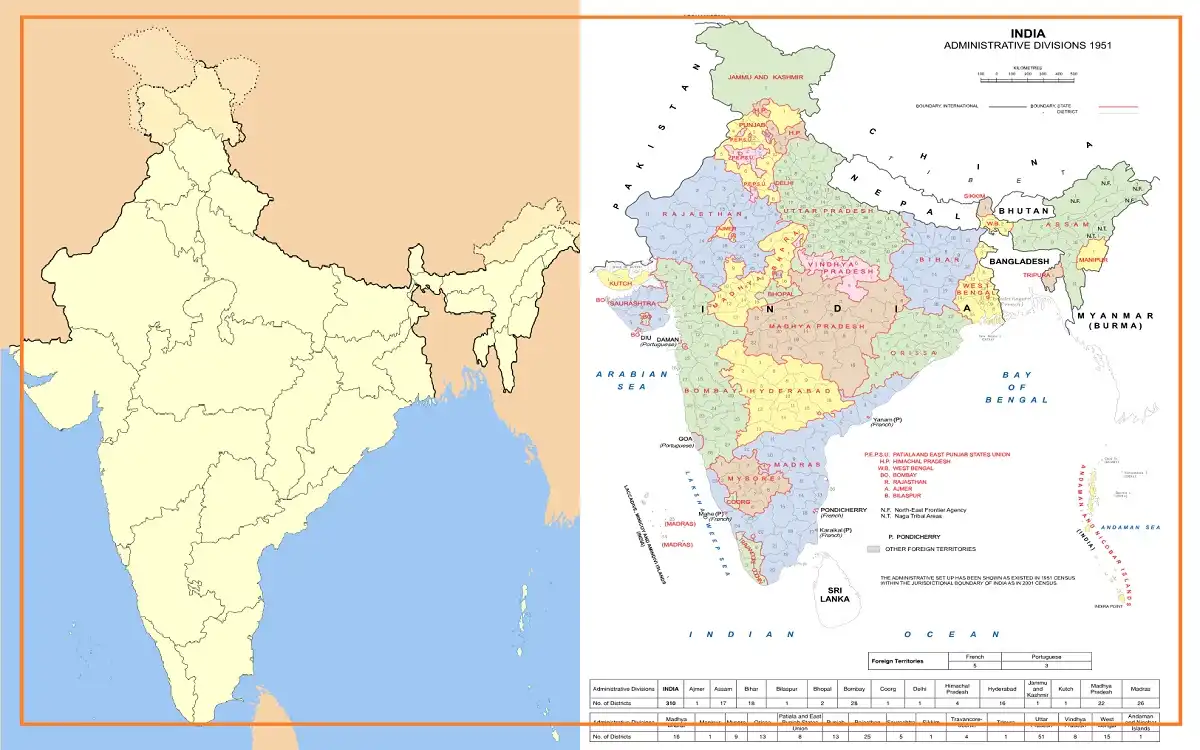
- Post-Independence Structure: After gaining independence in 1947, India needed a distinct category for regions requiring special attention. Initially governed as Part C states (chief commissioners’ provinces), these areas highlighted the need for direct central administration.
- States Reorganisation Act of 1956: This act formalized the concept of Union Territories, creating six original UTs: Andaman and Nicobar Islands, Lakshadweep, Delhi, Manipur, Tripura, and Himachal Pradesh. This marked a significant shift towards recognizing regions needing focused governance.
Evolution Over Time
- Changing Status: Some early UTs transitioned to full statehood as they developed economically and politically. For instance, Himachal Pradesh became a state in 1971.
- Colonial Legacies: Several UTs emerged from former colonial territories. Puducherry was formed from French territories while Dadra and Nagar Haveli were liberated from Portuguese control.
- Recent Changes: In 2019, Jammu and Kashmir were reorganized into two separate UTs—Jammu & Kashmir and Ladakh—following changes to its special status.
Reasons for Formation

Union Territories were established for various reasons:
- Political Considerations: Areas like Delhi require direct central administration due to their strategic importance.
- Cultural Distinctiveness: Regions such as Puducherry have unique cultural identities necessitating specific governance frameworks.
- Developmental Focus: Many UTs were created to ensure focused development in economically disadvantaged areas.
Governance Structure of Union Territory Of Bharat
The governance of Union Territories differs significantly from that of states in several Basic aspects:

Governance Structure
States have their own elected governments with a Chief Minister and legislative assembly. In contrast, UTs are administered directly by an appointed administrator or Lieutenant Governor representing the President of India.
Relationship with the Central Government

States operate under a federal relationship with the central government, allowing for shared powers. Conversely, UTs function under a unitary relationship where all legislative powers rest with the central authority.
Legislative Powers
While states possess full legislative powers to enact laws on various subjects, most UTs have limited powers. Some UTs like Delhi and Puducherry have their own legislatures but still operate under significant central oversight.
Administrative Control
In states, the Governor acts as a constitutional head with discretionary powers. In contrast, administrators in UTs lack similar discretion and refer decisions back to the President.
Funding and Revenue
States receive revenue based on constitutional provisions ensuring devolution from the central government. In contrast, funding for UTs can be arbitrary and determined solely by central authorities.
Current Status of Union Territory Of Bharat (as of January 2025)

As of January 2025, India has eight Union Territories:
- Andaman and Nicobar Islands
- Chandigarh
- Dadra and Nagar Haveli and Daman and Diu
- Delhi (National Capital Territory)
- Jammu & Kashmir
- Ladakh
- Lakshadweep
- Puducherry
There are currently no confirmed plans to change this list; however, discussions regarding new states or territories continue to emerge periodically.
Finally
The establishment of Union Territories in India reflects a unique approach to governance that balances central control with localized needs. As regions evolve culturally and politically, so too does the framework governing them. Understanding this dynamic is essential for grasping India’s complex administrative land.

While states enjoy significant autonomy within India’s federal structure, Union Territory Of Bharat serve as centrally administered regions tailored to address specific governance challenges. The ongoing evolution of these territories underscores India’s commitment to accommodating its diverse population while maintaining national unity.
For More University Education Update Visit Bharat Information