Story of Sacrifice
Every year, millions of Muslims book Umrah Packages and travel to the holy city of Mecca to perform Umrah. As part of its rituals, they walk between the hills of Safa and Marwah, drink from the Zamzam well, and circle the Kaaba in reverence. These rituals are not just a mere part of the worship but are deeply connected with the story of love and sacrifice at their core. In the history of Islam, the story of Hazrat Ibrahim (AS) and Hazrat Ismail (AS) is considered one of the most powerful ones when it comes to obedience and faith. The story is strong enough to move hearts, inspire devotion, and teach us about trusting in Allah’s plan. It was a divine test of both the prophets, which then became a symbol of sacrifice for the Muslims during Hajj and Umrah. This post is meant to explore the touching story of the father and his son, their unwavering faith, and how their actions continue to live on through the sacred journey of Umrah and Hajj.
The Test of Faith
Hazrat Ibrahim (AS) is known as a man of unshakeable faith. He was Allah’s beloved prophet and spent his life calling people toward the worship of one God. During this preaching period, he often faced rejection by his loved ones, exile from his homeland, and endless trials. None of these struggles were as challenging as that greatest test which came in his life in the form of a dream. This was a dream in which he sacrificed his beloved son Hazrat Ismail (AS). He was a prophet, so he knew that this was not a random dream but a divine command. Beyond being a prophet, he was also a father, and this dream must have shaken him to the core.
The next morning, when he shared the dream with his son Hazrat Ismail (AS), his response was likely to baffle kids of today. He said, “O my father, do as you are commanded. You will find me, if Allah wills, among the steadfast.” (Surah As-Saffat: 102). Today, this single verse is enough to show the level of their trust in Allah, where a father and a son are willing to submit to God’s will.
The Moment of Sacrifice
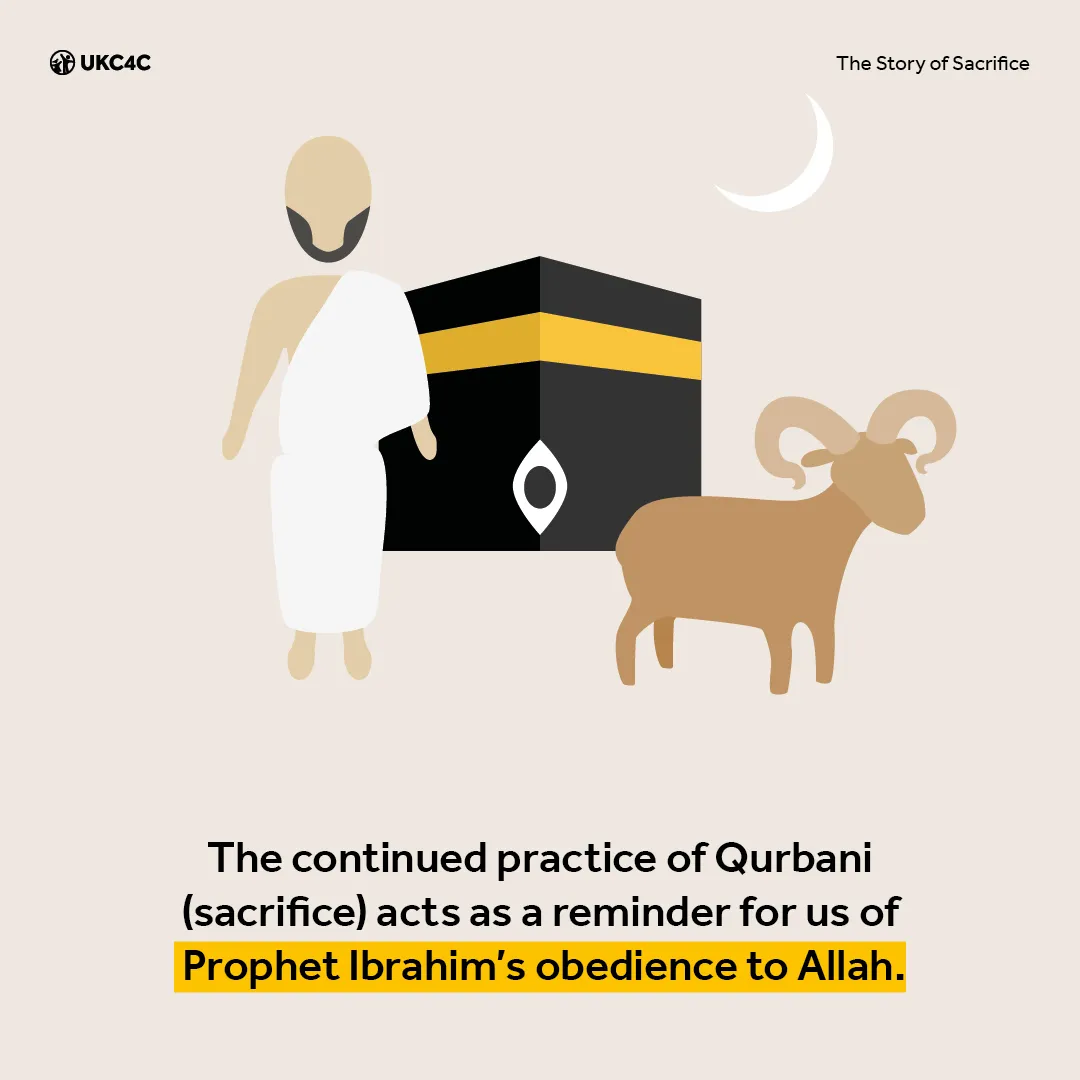
There is no doubt that the dream came as a shock to Hazrat Ibrahim (AS). But both the prophets made their way to the place of sacrifice by putting their faith in the command of Allah. Hazrat Ismail (AS) was laid down at the place of sacrifice, and Hazrat Ibrahim (AS), blindfolded, put the knife to his son’s throat to proceed with the sacrifice. As he was about to do it, Allah put a ram in the place of Hazrat Ismail (AS) and said, “O Ibrahim! You have fulfilled the vision.” (Surah As-Saffat: 104-105). This moment became an eternal symbol of submission and divine mercy. The main purpose behind this sacrifice was not the blood or a physical sacrifice of a son, but the sincerity of faith and willingness to submit.
From Sacrifice to Legacy
This whole sacrifice event became a defining moment in the history of Islam and has shaped the lives of Muslims on a large scale. The essence of this event is that it preaches to us to trust God no matter how hard the situation becomes. At the end of the day, there will always be light and reward for those who stay steadfast. Even if you don’t understand the logic behind Allah’s orders, it is always better for Muslims to obey Him. Allah liked this obedience of his prophets so much that every year Muslims slaughter millions of animals as a sacrifice on the occasion of Eid al-Zha.
The Connection between This Story and Umrah
When Muslims perform rituals, they walk in the footsteps of this powerful story. Every ritual links back to Hazrat Ibrahim (AS), Hazrat Ismail (AS), and Hazrat Hajra (AS)’s sacrifices. If we talk about the Sai between the hills of Safa and Marwah, this act depicts the desperate search of Hazrat Hajra (AS) for water for her thirsty son, Hazrat Ismail (AS). When Hazrat Ibrahim (AS) left her with his son in the barren desert on the command of Allah, she trusted in His will and, with her devotion and faith, faced all the challenges. This devotion and trust became the reason for the spring of Zamzam that continues to quench the thirst of millions of Muslims today.
The Ka’aba and the Legacy of Ibrahim and Ismail
The Ka’aba was built by Hazrat Ibrahim and Ismail (AS), who raised its foundations as a team united in their love for Allah. During Umrah, when you circle the Kaa’ba as Tawaf, in the true sense, you circle a structure that was built out of love and obedience. Hence, you join a river of believers that circle the house of Allah, which is a symbol of unity and submission.
Zamzam as a Gift of Faith
During Hajj and Umrah, people drink water from the Zamzam well, which might look like a regular well but has a profound significance. This well is a reminder of putting trust in Allah, no matter the situation, and then he rewards us by opening a door we have never imagined. This well connects you directly to the moment Allah responded to the faith and effort of Hazrat Hajra (AS).
Wrap Up
The tale of Hazrat Ibrahim and Ismail (AS) is something that keeps on guiding Muslims during the tough times. It is a powerful reminder that our every act of worship or ritual during Umrah and Hajj has a deeper meaning behind it. We do not just perform the rituals randomly but revive a story that is steeped in devotion and surrender. So, next time when you do Sa’i, keep the patience of Hazrat Hajra (AS) in the back of your mind. When you visit the well of Zamzam to quench your thirst, remember the mercy of God, and when you do Tawaf of the house of Allah, remember those hands that built it with love and submission. The journey of obeying Allah does not end when you complete the rituals, but it starts after your return home.You must carry these lessons with you and solidify your trust in God so much that you have no hesitation in giving up your dearest things in the way of Allah. If you plan to perform Umrah soon, reach out to Muslim Holy Travel and book amazing Family Umrah Packages to make your holy trip smooth and comfortable.